
How to Tell if a Gluten- and Dairy-Free Diet Is Right for Your Child.

As parents, we want to see our children healthy, joyfull, and thriving. But what if the foods they love most are the very ones keeping them stuck in cycles of inflammation, irritability, and fatigue?
I’ve worked with many families exploring the gluten-free, casein-free (and often soy-free) approach for children with behavioural and developmental challenges, and I’ve lived it myself, too.
Well Nourished Kids is a reader-supported publication. To receive new posts and support my work, consider becoming a free or paid subscriber.
This is our story, and what science now tells us about why removing gluten and dairy can sometimes transform a child’s body, brain, and behaviour.
🧠 The Hidden Connections: Why Food Can Affect the Brain
Research shows that children with developmental or behavioural challenges often have underlying biological imbalances that make them more sensitive to certain foods. These can include:
- Food reactions and intolerances (to gluten, casein, soy, additives)
- Nutrient deficiencies (especially zinc, magnesium, selenium, calcium)
- Chronic inflammation
- Mitochondrial dysfunction (low energy production in cells)
- Impaired detoxification (trouble clearing chemicals or heavy metals)
- Endocrine and immune system dysregulation
- Genetic and methylation imbalances (affecting neurotransmitters and detox pathways)
When the gut isn’t functioning well, the brain isn’t functioning well, because the two are in constant communication through the gut–brain axis.
Emerging research shows that gluten and dairy can impact mood, attention, sleep, and digestion, especially in sensitive children or those with neurodivergent traits (like ADHD or autism). While these foods are tolerated by some, others may experience subtle reactions that influence brain and gut function.
Inflammation and Immune Activation
In children with gut imbalance or food sensitivities, gluten and casein can trigger immune responses that release inflammatory cytokines. These are chemicals that affect both gut health and brain signalling. This inflammation can contribute to poor sleep, irritability, and behavioural challenges.
Digestive Impact
Gluten and dairy are common triggers for bloating, constipation, and loose stools in children with low digestive enzyme activity or microbiome imbalance. Casein can slow gut motility, while gluten may reduce beneficial gut bacteria and increase intestinal permeability.
Sleep and Behaviour
Sleep and behaviour often improve when the gut–brain inflammation is reduced. Parents report calmer moods, improved focus, and better sleep after several weeks on a GFCF diet, particularly when combined with gut-healing foods and probiotics.
How Gluten and Dairy Affect the Brain
The gut and brain are deeply connected through the vagus nerve and chemical messengers called neurotransmitters. When the gut lining is inflamed or “leaky,” undigested food particles (including gluten- and dairy-derived peptides) can enter the bloodstream. These can act like exorphins (opioid-like compounds) that affect the brain, leading to symptoms like brain fog, inattention, hyperactivity, or emotional dysregulation.
The result:
- Brain fog and difficulty focusing
- Emotional ups and downs
- Addictive cravings for bread, cheese, and milk
- Hyperactivity or withdrawal
- Sleep disruption
- Irritability or sensory overload
When I first considered removing gluten and dairy, I was overwhelmed. It meant removing foods that my kids love and enjoy everyday.
My son struggled with frequent wake-ups, bloating, ear infections, constipation and sensory sensitivities. His lab results showed high zonulin levels (a marker of leaky gut), lactose intolerance, and nutrient deficiencies.
We decided to remove both gluten and dairy and the change was almost immediate. He slept through the night, his energy improved dramatically, ear infections stopped, and the most surprising thing he started eating raw fruits and vegetables, foods that he wouldn’t even touch before.
We also discovered that he had low selenium, calcium, and iron, all crucial for brain and mitochondrial function. Once we addressed these deficiencies with nutrient-rich foods and supplements, he became more alert, connected, and emotionally balanced. His sensory issues improved. He wanted to play and explore.
Common Symptoms of Gluten and Dairy Sensitivity
Digestive signs:
- Abdominal pain or bloating
- Constipation or diarrhoea
- Gas or reflux
Immune and skin signs:
- Frequent colds or ear infections
- Stuffy or runny nose
- Eczema, rashes, or dark circles under eyes
Neurological and behavioural signs:
- Inattentiveness, brain fog, hyperactivity
- Irritability, anxiety, or meltdowns
- Repetitive behaviours
- Poor sleep or frequent night waking
- Sensory sensitivities
If your child mainly craves bread, cheese, pasta, milk, or processed snacks, this is usually a big clue that their body is reacting to those foods.
Getting Started: Grocery Shopping Guide
Here’s what to eliminate first:
- All sources of gluten: wheat, barley, rye, spelt, couscous, bulgur, malt
- All dairy products: milk, cheese, yoghurt, butter, casein, whey
- All soy-based products: soy milk, tofu, soy sauce, soy protein isolate
- Junk foods: items with artificial colours, flavours, preservatives, MSG, and emulsifiers
Watch for hidden additives on labels:
- Artificial colours (E102, E110, E122, E124, E129, etc.)
- Artificial sweeteners (aspartame, sucralose)
- Flavour enhancers (MSG, yeast extract)
- Preservatives (benzoates, sulfites, nitrates)
- Emulsifiers (polysorbate 80, carboxymethylcellulose)
What to Include Instead
Focus on whole, nutrient-dense, anti-inflammatory foods 🥕
- Fresh fruits and vegetables (varied colours for phytonutrients)
- Gluten-free grains: quinoa, millet, buckwheat, rice, oats (GF-certified)
- Clean proteins: grass-fed and pastured meat, liver and eggs
- Healthy fats: olive oil, avocado, coconut oil, flaxseed
- Dairy-free milk: coconut milk, almond milk, oat milk
- Homemade bone broth from chicken and beef for gut repair and nutrients.
- Fermented foods: live-cultured foods like sauerkraut, or other cultured vegetables, coconut yoghurt.
- Juicing and blending fruits and vegetables : excellent way to get lots of nutrients. Cucumbers, carrots, celery and apples are our family’s favourites.
💡 Tip: For kids with sensory issues, start with textures that they are used to — soups, smoothies, veggie muffins, meatballs, then gradually introduce more crunch and variety as their tolerance grows.
🧁 Bonus Recipe: Blueberry Banana Muffins (Gluten & Dairy Free)
These muffins are one of my go-to recipes when my kids want a sweet treat. They are moist, fluffy and naturally sweet. Perfect for breakfast or lunchboxes.
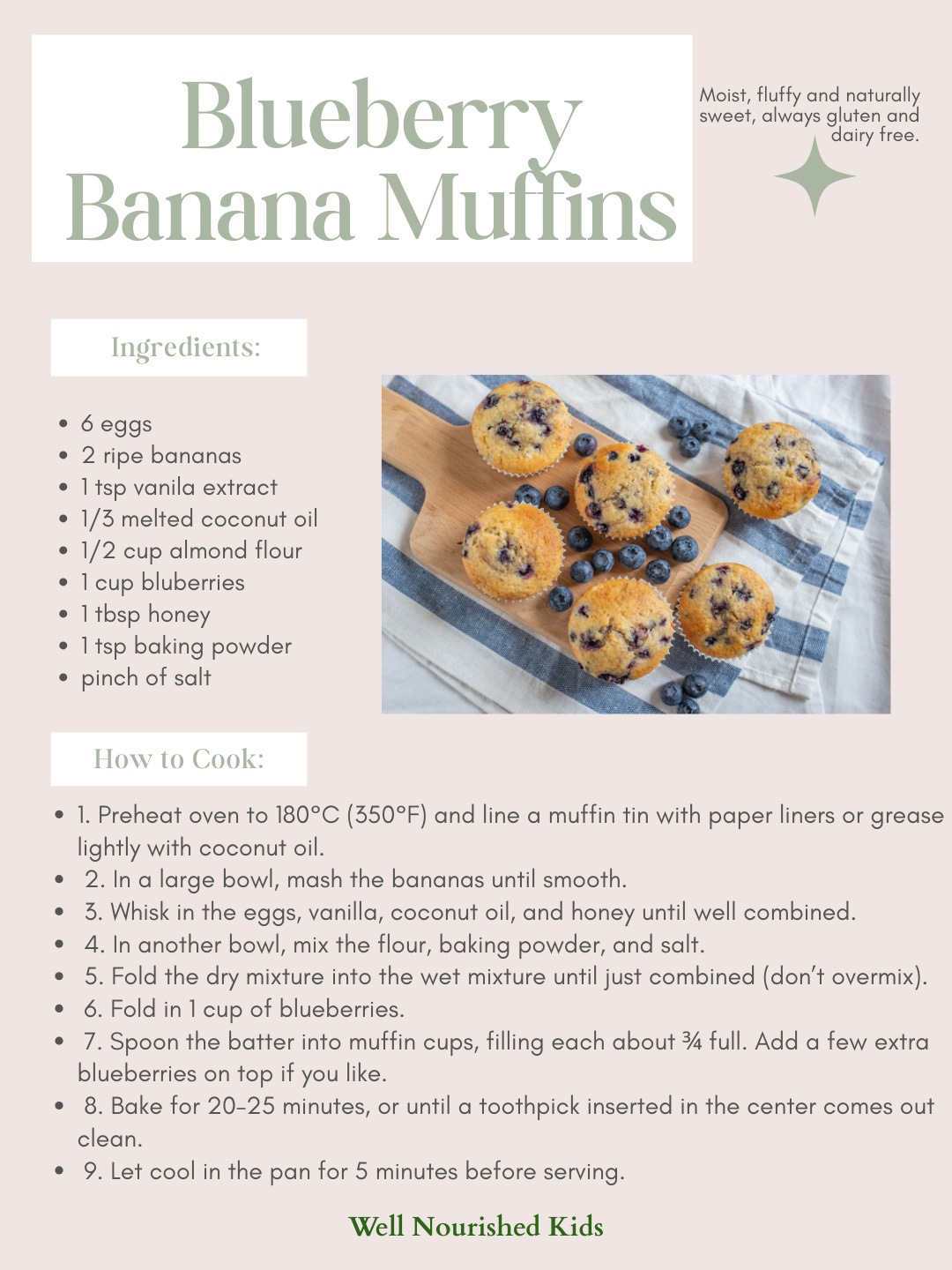
These are family staples that help maintain calm, focus, and emotional balance, while keeping mealtime joyful.
🌸 If You Need Personalised Support
If you’d like help transitioning your family to a gluten- and dairy-free diet, or you’re navigating food sensitivities, picky eating, or behavioural challenges, I offer 1:1 consultations to help you design a nourishing, realistic plan that works for your family.
You can reach me directly to book a free session at support@wellnourishedkids.com.
I’d love to help you create your own Well Nourished Kids story.
Love,
Andreea x
Well Nourished Kids
💌 If you found this helpful, subscribe to Well Nourished Kids for more science-based guidance on feeding healthy, resilient brains.